Master Finish

Commercial Kitchen Flooring

We install seamless PU cement (polyurethane cement) floors in commercial kitchens and food areas across Sydney and NSW, and we repair or replace failing kitchen floors. PU cement is widely used in kitchens because it handles heat, hot-water washdowns, fats and oils better than standard epoxy, and it goes down with coved skirting so there are no joints for water and bacteria to collect in.

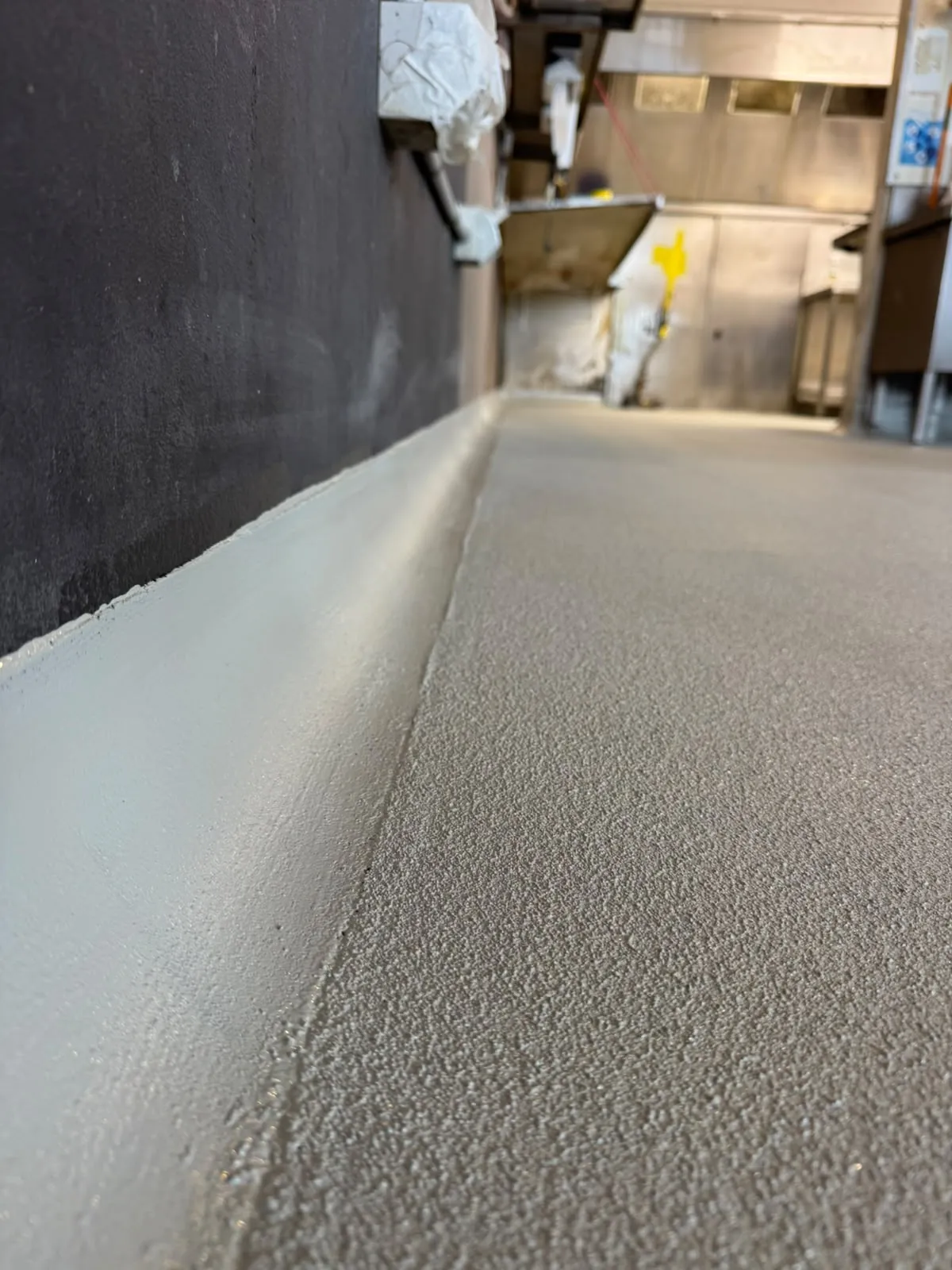
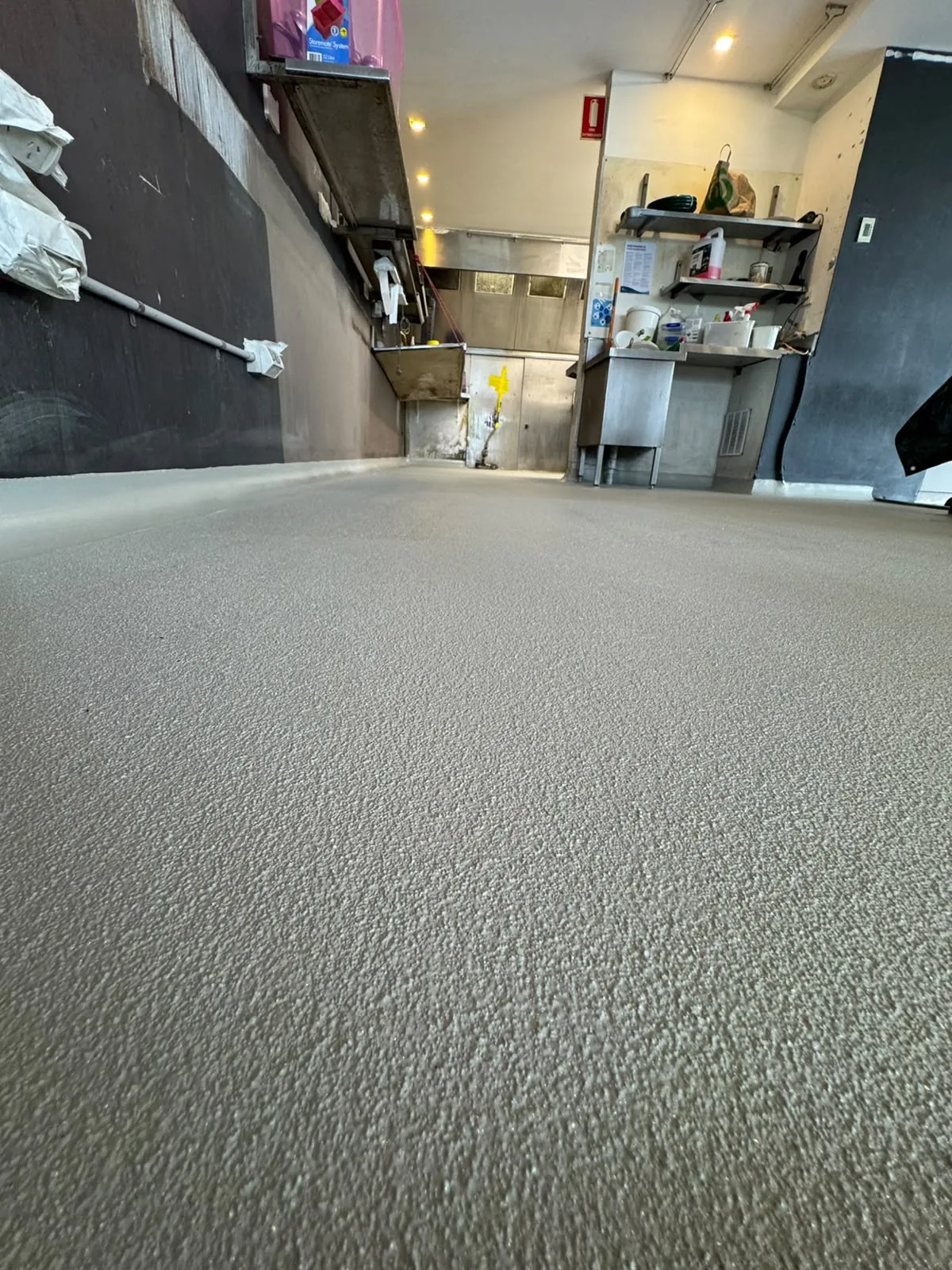
Textured PU cement floor in a commercial kitchen

01Applications

Where it's used

  • Restaurant and café kitchens
  • Hotel, club and institutional kitchens
  • Food preparation and production areas
  • Bakeries and butcheries
  • Wash-down and cleaning areas

02Specification

What decides the system

  • Drainage and falls to waste
  • Coving height and detailing around equipment
  • Condition of the existing floor and substrate
  • Available shutdown window
  • Slip-resistance requirements
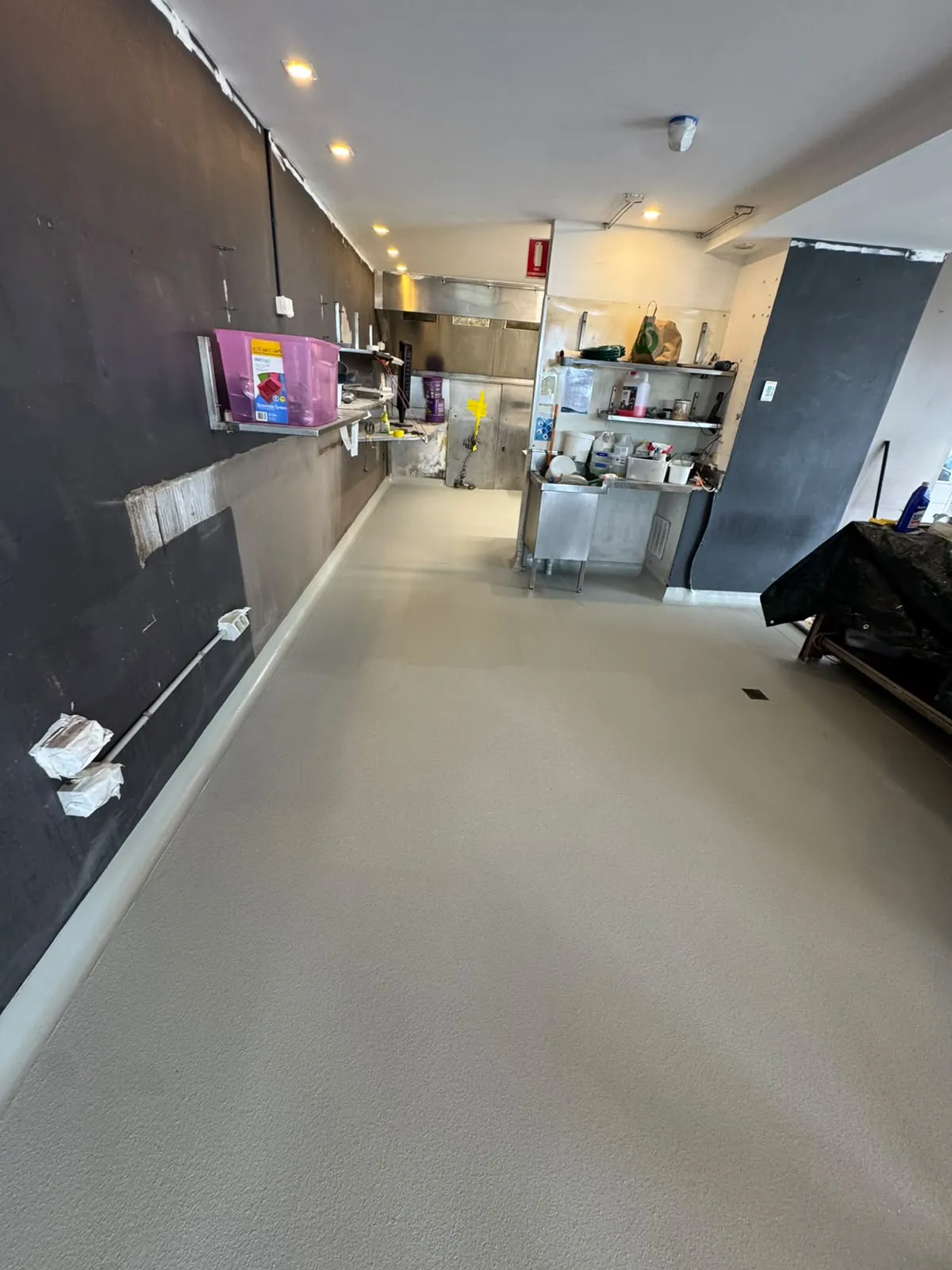
PU cement floor with coved skirting in a commercial kitchen

↗Why PU cement

Built for heat, water and hygiene

  • Tolerates hot washdowns and temperature changes
  • Seamless, with coved skirting for hygiene
  • Textured finish for slip resistance in wet areas
  • Withstands fats, oils and many cleaning chemicals

01Repairs

Kitchen floor failing?

Common problems we’re asked to fix: cracked tiles and failed grout, lifting or split vinyl, worn or peeling coatings, and water pooling away from drains. We inspect the floor and recommend targeted repairs or a new seamless PU cement floor, depending on how much has failed and why.

02Downtime

Planning around trading

A kitchen floor has to be installed and cured before service resumes. We confirm the area, preparation and cure time when we quote, and plan the installation sequence and timing with you, so you know how long the kitchen will be out of action before work starts.

03Process

How we install it

  1. 01

    Inspect

    We check the existing floor, substrate, falls to drains and equipment layout, and confirm your shutdown window.

  2. 02

    Remove and prepare

    Existing tiles, vinyl or failing coatings are removed and the substrate is mechanically prepared and repaired.

  3. 03

    Install

    PU cement goes down seamlessly, with coved skirting and detailing around drains and equipment.

  4. 04

    Cure and hand over

    We allow the correct cure time before the kitchen reopens and give you cleaning guidance.

04Quoting

What we need to quote

  • Approximate floor area (m²)
  • Suburb and type of venue
  • Current floor: tiles, vinyl, coating or bare concrete
  • Any damage, drainage or pooling problems
  • Your shutdown window or trading hours
  • Photos of the floor, drains and wall junctions

→Get a quote

Quote your commercial kitchen floor

Send us the floor area, suburb, current floor type and your shutdown window. Photos of the floor, drains and wall junctions help us quote accurately.

04Project photos

Our work

PU cement floor with coved skirting in a commercial kitchenTextured PU cement floor in a commercial kitchenSlip-resistant PU cement kitchen floor

05FAQ

Common questions

How long will the kitchen be closed?

It depends on the area, the preparation needed and the system's cure time. We confirm this when we quote, so you can plan the shutdown.

Can you work around our trading hours?

Tell us your trading hours and any shutdown window when you request a quote. We plan the installation sequence and timing with you before work starts.

Do you repair commercial kitchen floors?

Yes. We assess failing floors, such as cracked tiles and grout, lifting vinyl or worn coatings, and recommend either targeted repairs or removal and a new seamless floor.

Can you do the coved skirting?

Yes. Coved skirting is part of the system, as shown in our project photos.

Why not just use epoxy in a kitchen?

Standard epoxy is less tolerant of heat and thermal shock from hot washdowns. PU cement is generally the better choice for commercial kitchens.

→Next step

Let's talk about your floor.

Send us the floor area, location and current condition. Photos or plans help us quote accurately.